Professor and Constitutional Judge
During this Master Club visit, we got a rare look inside the workplace of our professor Verena Madner, who has been Vice-President of Austria’s Constitutional Court since 2020.
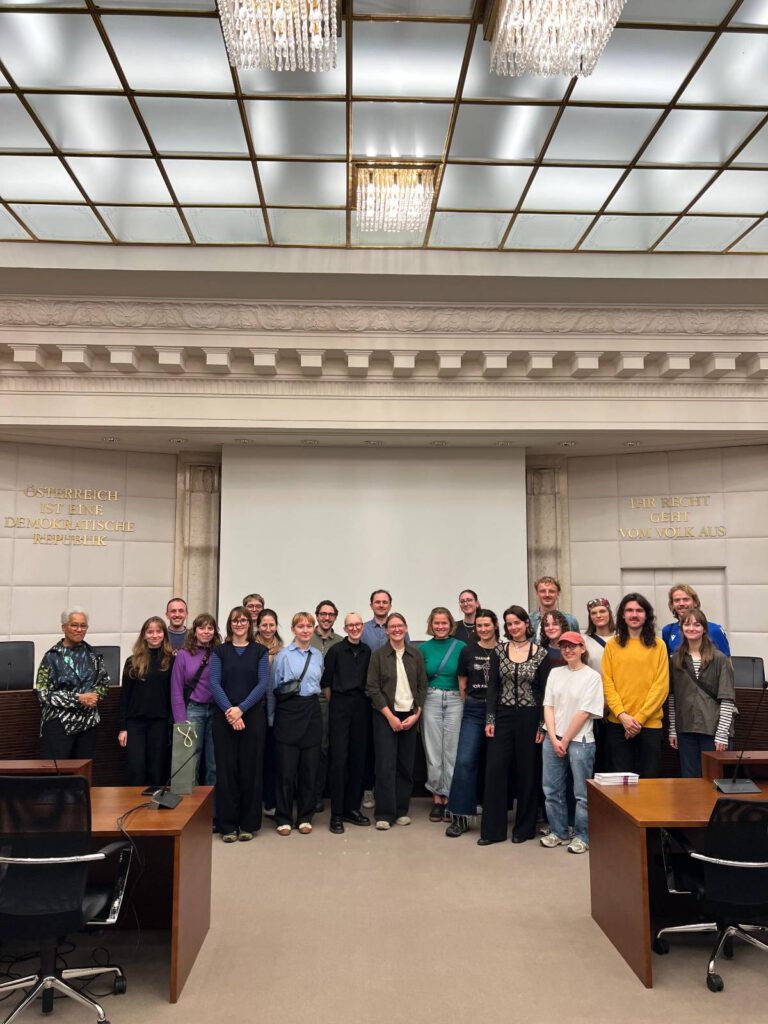
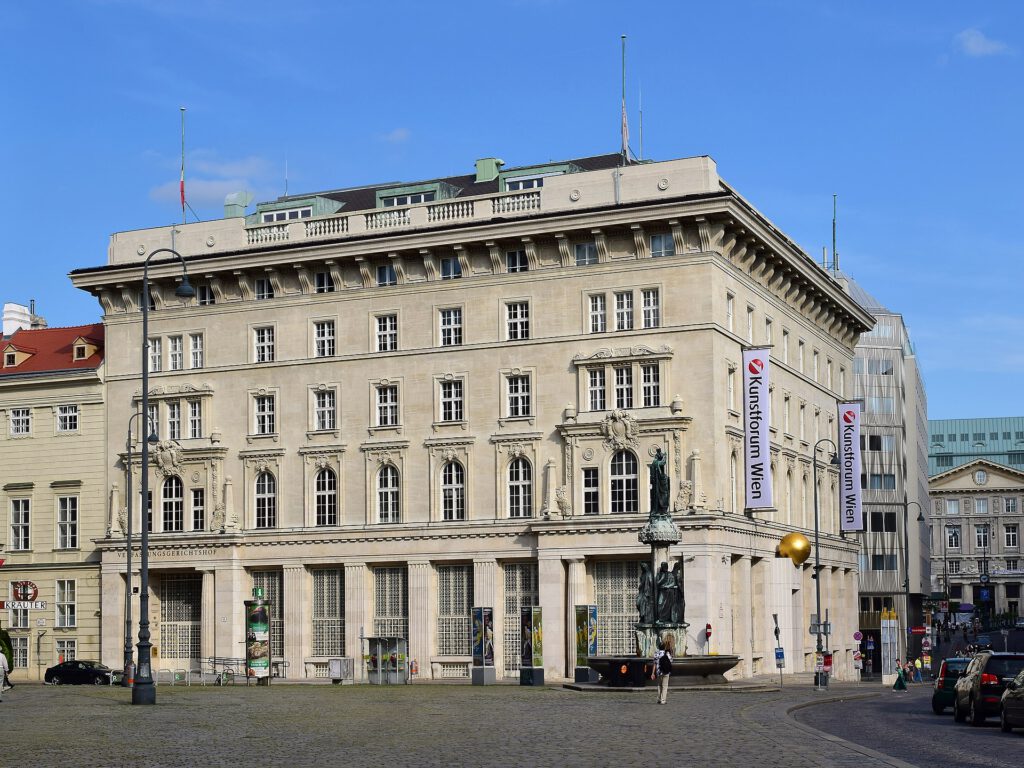
This April, we visited Verena Madner, professor in the SEEP program and Vice-President of the Austrian Constitutional Court, at her main workplace: the “Verfassungsgerichtshof” (Constitutional Court) in Vienna. It was a unique experience to see the halls and courtrooms where foundational questions of democracy, fundamental rights, and the rule of law are discussed and decided.
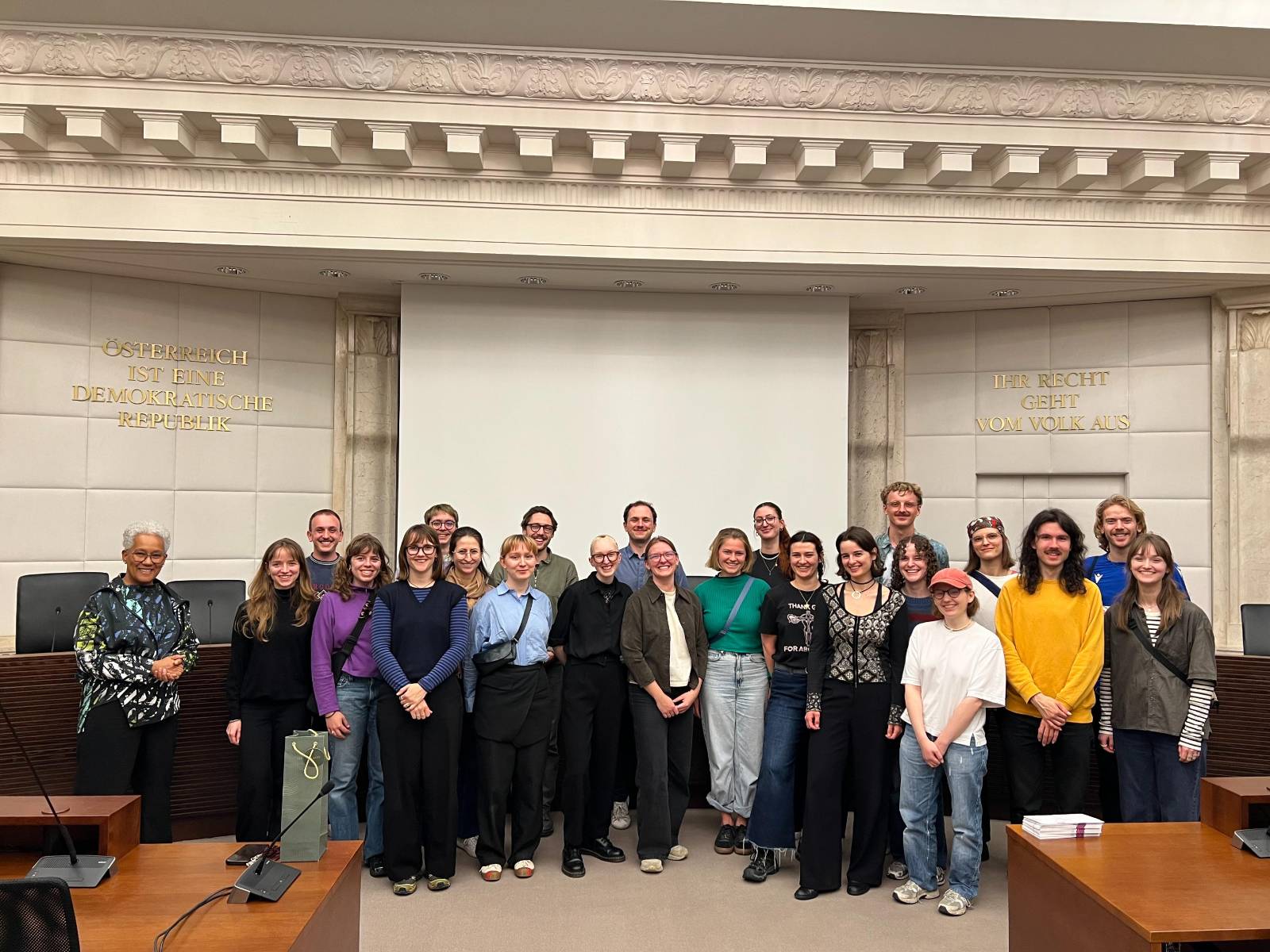
The trip highlighted that SEEP professors do not only teach socio-ecological transformation, governance, and institutions in theory. Verena Madner works directly in the place where these issues are negotiated in practice. As Vice-President of the Constitutional Court and a scholar of public law, environmental law, and governance, she brings first-hand institutional experience into the classroom.
We were welcomed by Verena Madner together with Felix Reimann, a staff member at the court, who guided us through the historic building. But even more valuable than the tour itself were the conversations that took place along the way: in the courtroom, in meeting rooms, and in the corridors of the Court.
One topic was the Austrian constitutional system itself. Austria has played an important role in the history of constitutional review, especially through the model associated with legal theorist Hans Kelsen and the Austrian Federal Constitution of 1920. The idea of a specialized constitutional court, with the authority to review laws and repeal them if they violate the Constitution, later became an influential institutional model beyond Austria. In this sense, the Austrian Constitutional Court is not only a national institution, but also part of a broader history of constitutional democracy.
During our visit, we learned more about what it means for a court to act as a guardian of the Constitution. The Constitutional Court reviews whether laws comply with constitutional principles, protects fundamental rights, and helps maintain the balance between democratic decision-making and constitutional limits. Standing in the rooms where such decisions are prepared and made gave these abstract ideas a very concrete meaning.
For SEEP students, this was particularly fascinating. Many of the challenges we study — climate change, infrastructure, land use, public participation, social justice, and democratic governance — are not only economic or political issues. They are also legal and constitutional questions. What are the responsibilities of the state in the face of ecological crisis? How can fundamental rights be protected while enabling necessary transformation? What role should courts play when political systems struggle to address long-term environmental and social problems?
The visit was a chance to see how the themes we discuss in SEEP appear in one of Austria’s most important democratic institutions. It also gave us a more personal impression of one of our professors: not only as someone teaching in a seminar room, but as someone working in a place where legal reasoning, democratic conflict, and constitutional responsibility meet every day.
When a student points to the ashtrays still sitting on the main courtroom table, Verena Madner smiles. No one has used them for ash in years. Smoking has long been banned in the building. Instead, these small relics of another era now serve a more bureaucratic purpose: collecting the rubber bands that hold together the court’s many paper files.
We would like to warmly thank Verena Madner and Felix Reimann for taking the time to welcome us, guide us through the Court, and give us insight into this other “natural habitat” of socio-ecological governance.